One Month Four Islands

Yes, Andy Pascual, I have experienced the Filipino full body massage at The Spa and I will never go back. For P1200 I went to the sauna, pool, Jacuzzi and received an hour and 15 minutes of magic.  The room was dimly lit by wall sconces and candles while the smell of mint and lemon wafted through the air. I had hot oils massaged into my back, arms, legs and stomach while I drifted in and out of consciousness. My new Filipino friend, Nads, and I were fully relaxed and disoriented by the time we emerged into the bustling Marikina City traffic and light drizzle. I wanted to fully prepare my body for a month long vacation from the city I’ve started to call home.

Giant Fish at The Spa

In 9 hours, I will be boarding a plane bound for Davao- a city located in Mindanao about two hours south of Manila. It’s time for the some travel. The itinerary:

1. Samal Island– Coral Reef Reconstruction

2. Boljoon, Cebu- Meet the famous Stu and become a certified SCUBA diver

3. Bohol– Find some tarsiers, chocolate hills, and fun in the sun.

4. Bantayan Island– Research for Atty. Oposa’s upcoming book, research for my thesis, work in the School of the SEAs

So as of now I will not return to the Philippine capital for an entire month. Fortunately by the power invested in Wi-Fi, I will continue to upload pictures and post blogs. I have waited four weeks to see a Filipino beach, white sand beaches, and crystal blue water. I want a healthy cancer-free tan, a dive certification and a greater appreciation for a country I’ve grown to love.
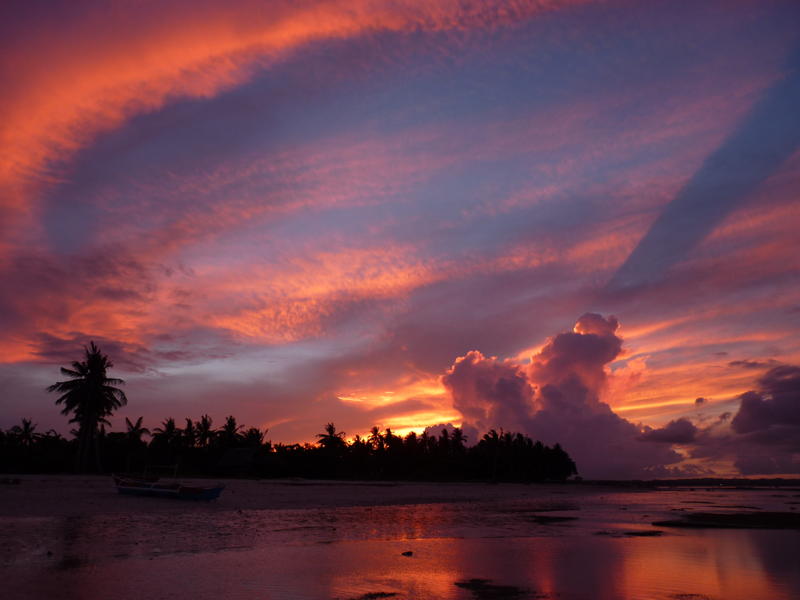
Bantayan Island Sunset May 16, 2011

Fellow readers, if you have a chance,go to the Philippines for a massage and spa treatment. Cheap and incredible. What’s so wrong with being a diva anyway?

Blast from the Past Revisited

Tomorrow I will begin Week #4 in the Philippines. As my host dad likes to exclaim, “Holy Cow!”

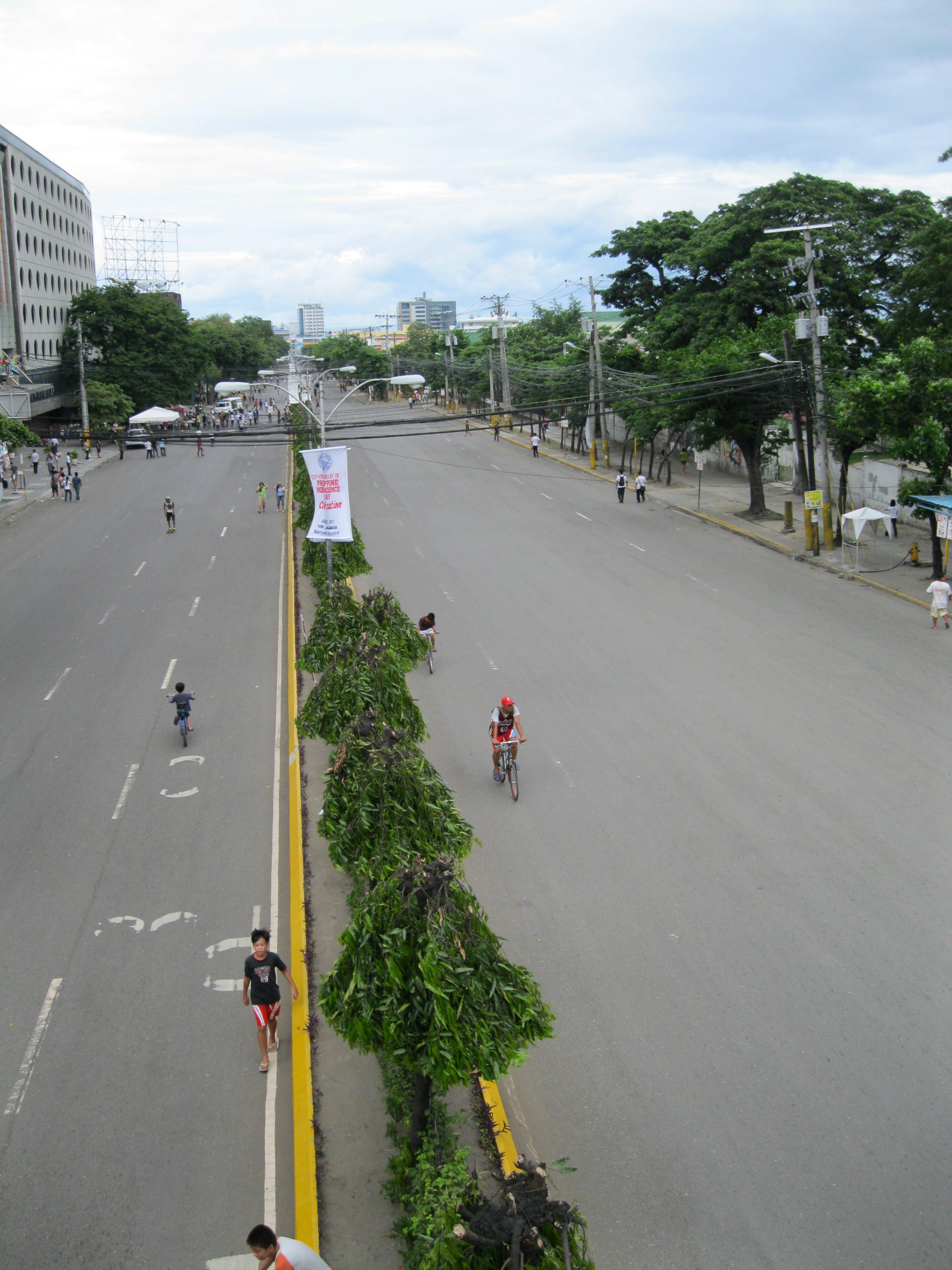
I arrived back in Manila last night, exhausted and honored to be part of the first ever Road Revolution. There is nothing like seeing a multi-lane road, usually congested with air pollution and traffic, filled with longboarders, families biking and runners streaming past in flocks. I was amazed by the turnout and support of the thousands of petition signers and various organizations. And here I am at Week 4. The last time I arrived in Manila airport was a Tuesday in May, time zones away from the US, I thought as I munched dried mango slices on my way to the airport. What do they say about time flying?

But the theme about time moving and catching up with us doesn’t just apply to my trip to Cebu. It also applied to my father and his recent discovery of an old acquaintance. That is the way it is with parents. Moments before you label your father’s travel stories as crazy and far-fetched, something happens that forces you to reconsider.

When my father traveled to Cebu as a young man, he met a man named Stu Gould. Stu was a diver like my father and the two of them enjoyed many fond memories on the beaches of the Philippines. When I told my parents I would be spending a week in Cebu, he googled “Stu Gould” and e-mailed a man with the same name, who currently owned a resort in a similar place to where they had met. My father wrote about the Stu he knew, how he collected tropical fish, was an ex British Diver and had (at the time) been living in Cebu for a short while.

“We lived in a small cabin on the water, dove a lot, almost lost a young British Diver and had to ship him up to Subic for decompression and took a ride down to Mindano to look at a gold mine.” my father wrote. “If this the Stu Gould, how the heck are you.”

Was this new Stu Gould, the mystery man of the past? I was skeptical at best. My father would probably see my eyes rolling from across the ocean. That was years ago. It’s impossible. I’ll be believe it when I see it. 

And I did see it, in the form of a response e-mail the same day:

“Hi Ken! Long time no hear! Yes it is I Stu Gould,” it read followed by a nice description of the last 30+ years detailing Stu’s return to the UK, birth of his 4 kids, and decision to build and run the Granada Beach Resort now 100 km south of Cebu. He personally invited me to take dive lessons and spend time at the resort during my travels throughout the Philippines. Go figure.

 Lesson: The next time your father tells you he may have recovered a long lost British diving friend from the small island of Cebu in the Philippine archipelago, just believe it. He’s probably telling the truth.

Car-less Osmena Boulevard

Road Revolution: Cebu City, Philippines

Road Revolution- roadrevolution.ph

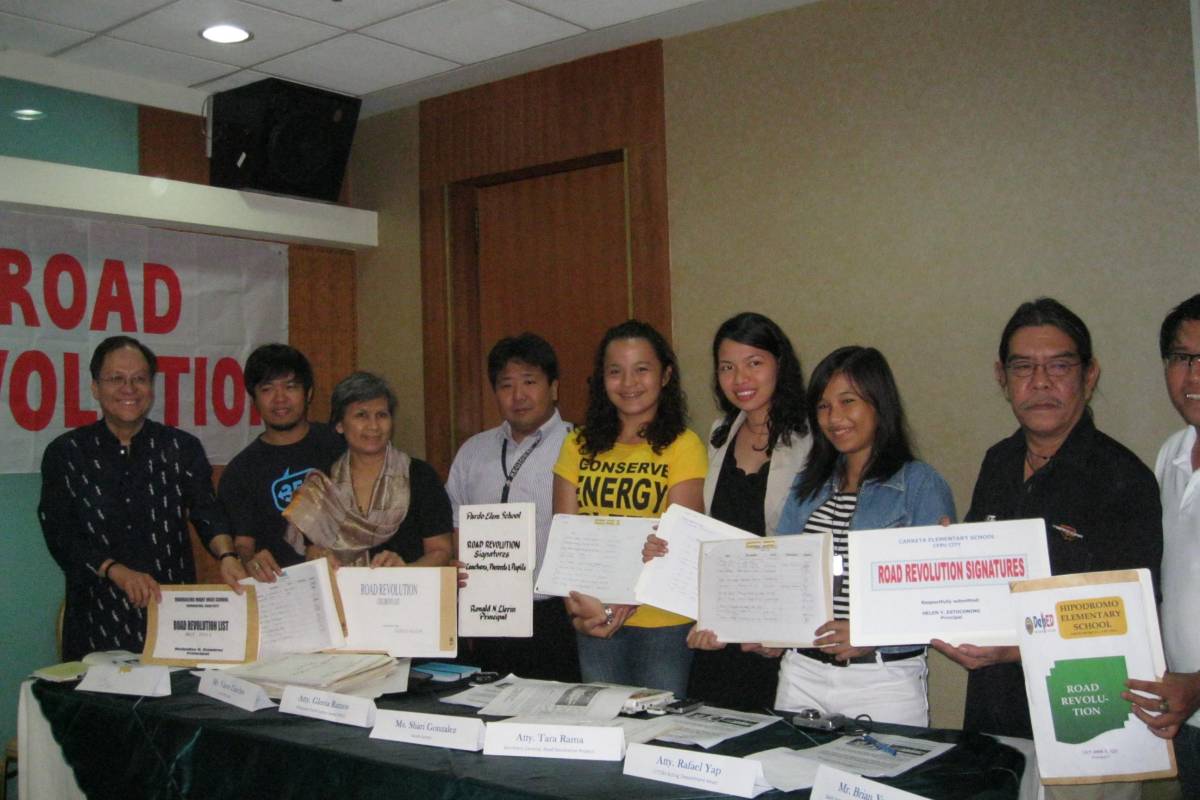
Cebu City is located a little over an hour south of Manila by plane. As soon as we landed, I checked into my room and rushed with Atty. Oposa to the press conference. Different members from TV and radio stations were present, weaving between one another in the small room of the Casino Espanol. On the panel was Atty. Oposa who gave the main presentation followed by members of 350.org, youth leaders, and other main organizers of the event. I sat in the back and smiled, hoping no one would try to ask me something in Cebuano.

Presentation at Dept. of Education for Students

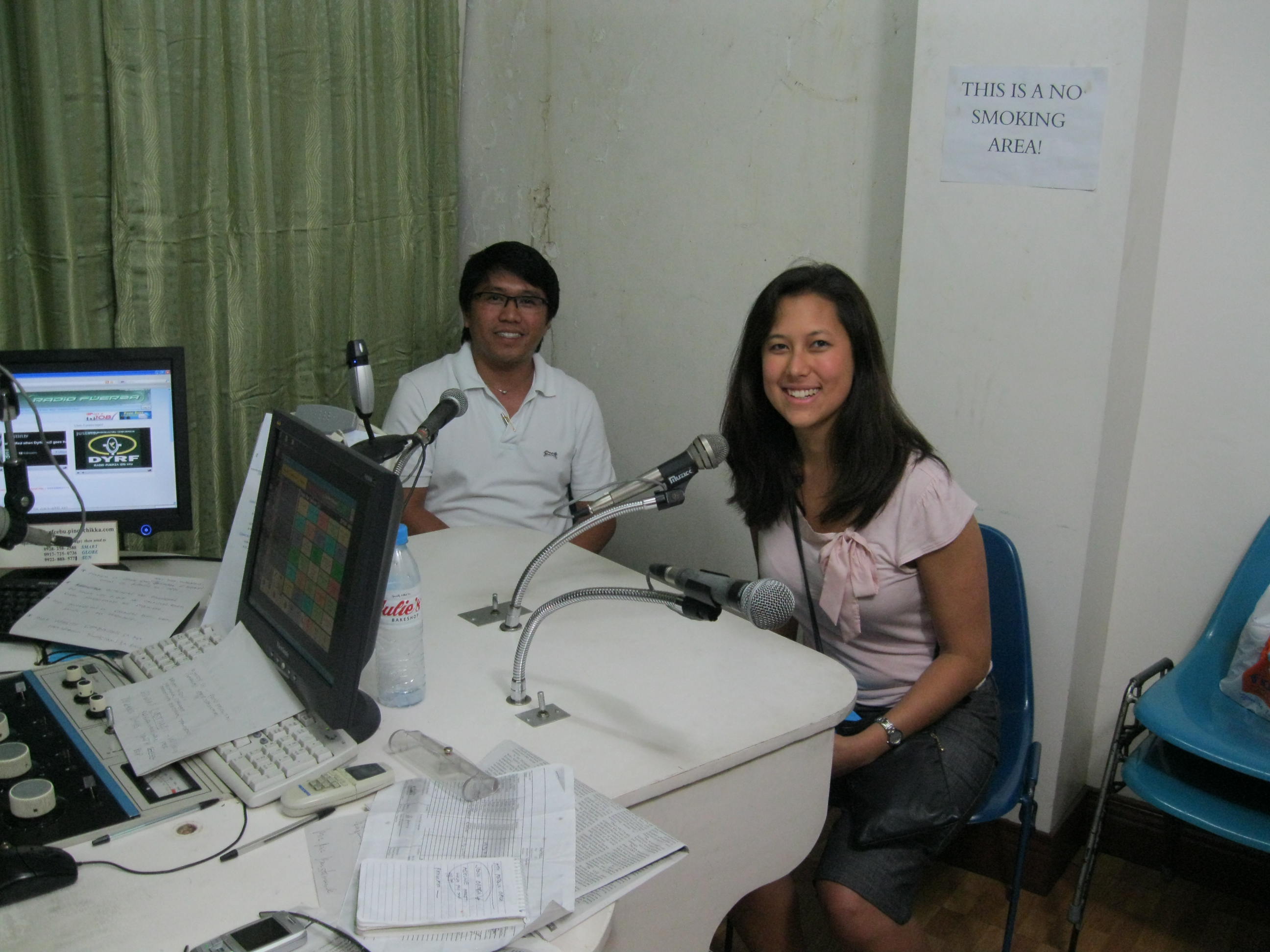
The rest of the day was packed. We made our first stop along Osmena Boulevard, the street that would be closed down on Sunday June 12th. Next, we traveled to a trade school and saw the making of the Renewable Energy train (RE Train) that runs exclusively on petal, solar and wind power. We spoke on air at three different radio programs to explain the Road Revolution and encourage citizens of Cebu City to come support the cause. On the last program, an FM station, I was able to introduce and explain the event in English…the only language I know. I got back to my room around 10pm, throughly exhausted and content with the day’s work.

Me and Brian at the radio station DYRF

It is amazing how quickly the people here switch between their native language and English to communicate. The language spoken in Manila by the general public and my host family is not the same language spoken here in Cebu. People in Manila speak the national language, Tagolog, while the people in Cebu speak Cebuano- a variety of Basaya the language in the middle region of the Philippines. The majority of the vocabulary is different and I had to re learn basic phrases like “How are you?” and “Good night.” By relearn, I mean promptly forget spelling and pronunciation as soon as they are uttered. I have yet to understand why Filipinos would decide to start words with ng. Don’t try to pronounce this at home, folks. Words like ngit ngit (dark) are strictly meant to be said by professionals.

Renewable Energy Train in the Workshop

The next day included another radio interview, a marriage proposal from a father whose son is a single doctor in Ohio, visits to three different grade schools, and my first ever jeepney ride. All in a day’s work. In two days, I have not only learned about what the Road Revolution is but explained it to small children, adults, and teachers all across Cebu City. It got me thinking. What are the future implication of this Road Revolution? We have collected over 6,500 signatures in effort to expand sidewalks, increase bike lanes, and introduce mass public transportation along with edible gardens. I’m amazed by the progressiveness of the idea, prevalent in a “developing country” no less. I’m surrounded by people with big ideas and deep convictions people dedicated to protecting and restoring our natural environmental in order to save humanity from itself. I just hope I can somehow prove myself amidst this group of intelligent, dedication stewards of our beautiful planet. One road at a time.

Jeepney

Internship: Law of Nature Foundation

Just as I was getting used to my new relaxed life in the Philippines, I was reminded of the real reason I spent a total of 17 hours in the air to fly half way across the world. No it was not their delicious desserts and ability to purchase rice at McDonald’s. It was the chance to intern at the Law of Nature Foundation and learn more about environmental law than I could have dreamed possible.

The office is located in Alabang, about an hour and 15 minutes south of Marikina City, sometimes more, with the infamous Filipino traffic. At most, the small two-room space on the 6th floor of the Westgate building consists of three people: the secretary Lisa, the young multitasking genius Vivienne, and the founder of the organization, Atty. Tony Oposa. While the office doesn’t seem impressive, don’t be fooled. Projects include: a sailing and environmental eduction school in Bantayan Island, one of the top vacation spots in the Philippines, a Road Revolution in Cebu city, a Global Action on Climate Change, ongoing legal battles, presentations to the Senate, and coral restoration all occurring at the same time.

It’s a lot to take in. Especially on a first day. Anna Oposa, Atty’s daughter, is extremely active in the organization too. She spoke at the Senate hearing on the illegal exportation of black sea corals and was quoted extensively on the front page of Philippines Daily Inquirer. By the end of my first week, I had already visited the Senate to speak with senators about the illegal black sea coral exports and met a director about a new bill. I received a personal invitation to the house of the Filipino president, a flight to Cebu to meet the masterminds behind the Road Revolution, and solidified plans to spend an entire month on Bantayan Island researching environmental economics for Oposa’s upcoming book.

I need a nap. But check out the Road Revolution. A petition is being signed to change Osmeña Boulevard, a major street in Cebu City, into a street focused on people. The proposed road will allocate 30% for sidewalks, 30% for bike lanes, 30% traffic, and 10% for edible gardens. It’s a mind revolution in the truest sense of the world. You can also read about it by blog and like it on Facebook!!

I’m perspiring just thinking about the next couple months. Oh wait, that’s the humidity.

Little side of rice at McDonalds

White is Right

On my second day in the Philippines, I traveled 45 minutes west to the city of Malate to meet up with my friend Katrina. Katrina and I lived together in the same højskole when I studied abroad in Denmark. She was leaving to return to Denmark the following day and I got to spend time with her before she left. Our destination: Mall of Asia.

Manila Bay (far left) and Boardwalk

Mall of Asia is not as big as it sounds…it’s bigger. We casually strolled past the food court, brand name stories, concert stage, and Olympic sized ice skating rink. Yes, ice skating rink. Hundreds of Asian families surged past us and I sat in awe as we ate our dim sum from a rolling vendor’s cart. From the top floor of the mall, you can walk along an overpass and down the stairs to the boardwalk adjacent to the water of Manila Bay. I could smell the salt as the brown waves crashed onto the rocky shore. It was unlike any mall I had ever been to before.

Katrina told me about her home village in the south of the Philippines, the traditional food and her education. I loved hearing about her life as a Filipino my age,  in love with the native food and national hospitality but frustrated with the country’s Catholic emphasis and conservative way of thinking. We switched to a discussion of beauty and the ideal woman as viewed by Filipino women. “White,” Katrina said, “is the best. It reflects Western beauty.” In the Philippines and southeast Asia, white skin represents beauty and power. Your skin tones tells society whether your family works outside in the sun or is wealthy enough to stay indoors. We past pharmacies, beauty stores and signs advertising skin whitening technology. Products included deodorants, dietary pills, creams, and body washes. I was shocked by its normalcy, the customers’ abundant desire to alter their skin tone. The models’ skin in the pictures seemed almost iridescent  in an unnatural way, life-size portraits strung up in store windows. What is that about wanting what you can’t have?

Varieties of Whitening Cream

How many jokes have I made to my friends in the States about how tan I would get this summer? The popularity of bronzers, spray-on tans, and tanning salons in America is not going away any time soon. After all, no one wants to put on her prom dress looking like a ghost. The image of beauty, of wealth, of success is relative across cultures and time zones.

Now I’m not going to start preaching but make sure you love the way you look. Love your skin in its natural color, be it: white, brown, black, or somewhere in between. If nothing else, you’ll save a lot of money on beauty products that you could be spending on a new pair of heels.

Katrina and I
Katrina and I

Day One: Manila

“Little America,” Heaven said as we sped through the streets, the driver effortlessly navigating the large black van through heavy Manila traffic. I passed  large condominiums, 7-11’s, and good ol’ McDonald’s on my way from the airport back to my new home. In many ways the Philippines appears to look like the country which occupied its soil following Spanish rule. Major brands for clothing and shoes are the same as in America and the newest generation of Filipino children speak English as their first language.

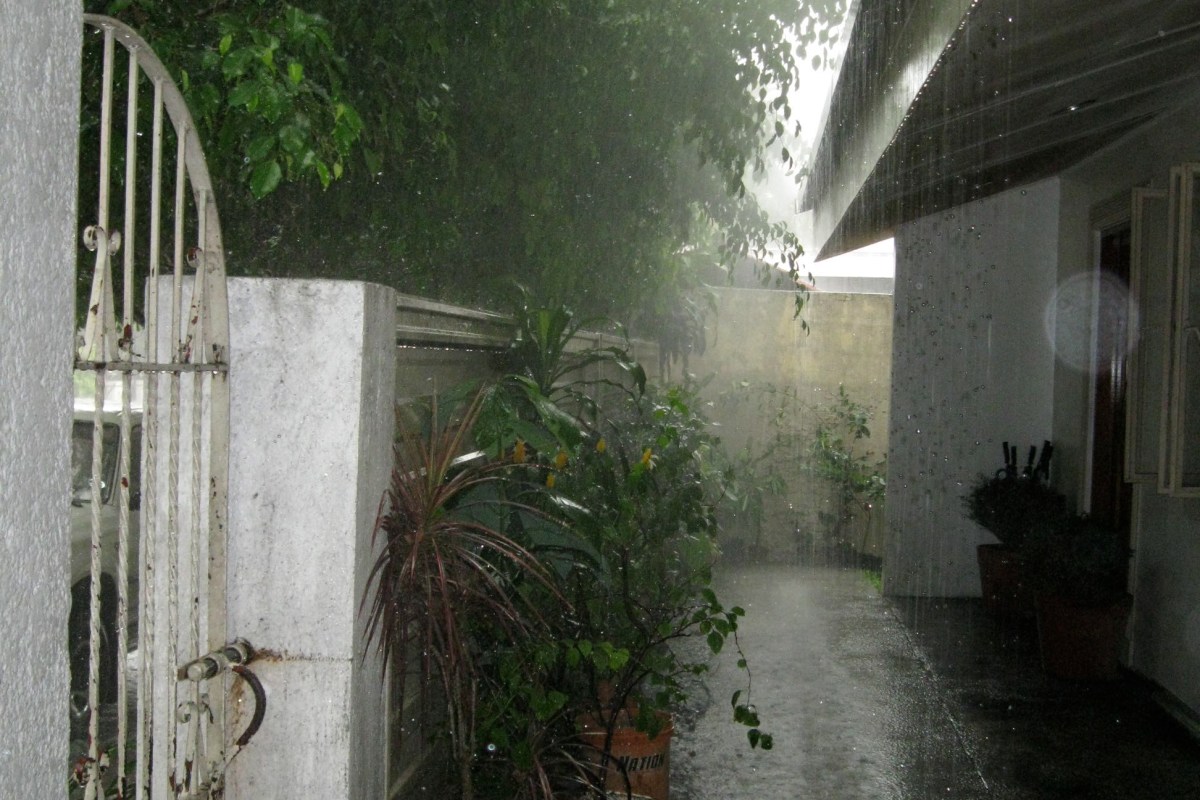
But there seems to be many ways in which this island nation is also quite different.. On my first day, a sudden downpour erupted from the skies and the rain came in torrents, beating against the metal roof. I was amazed with the sudden weather shift and ran outside. The children continued to play inside, largely unfazed by the wind and the noise. Heaven’s wife, Eileen, and I went downtown to Marikina City in the afternoon and on our way downtown we past the slums, colorful windows glued next to one another in makeshift apartments. Children played in the recently created puddles and splashed the cars driving along the road. They jeered at each other and ran together as a mass of colorful shorts and brown bodies. “When there are many days of heavy rain, the water escapes the river and floods the slums,” Eileen said and told me of 5 days of heavy rain that occurred two years ago in Manila. It seems that those in poverty suffer the most in more ways than one. The gap in wealth was there, right beyond my window and I wondered how long it would take for the shock of witnessing such poverty to become an accepted occurrence.

I spent the rest of my day at the gym, Fitness First, working out with Eileen and her personal trainer Alvin. As the fit 21-year-old I imagined myself to be, I have never sweat so much in my life. I was overweight by 15 pounds and had too much body fat, according to the scale in the training room. My host mom bounded up and down effortlessly as I trudged through the exercises, panting and wiping my face in-between squats, arm exercises and stomach curls. Alvin and I joked about my weak arm strength and I created my new Filipino name, Katrina Torres. Thankful I did not throw-up or otherwise pass out in front of other jogging stretching Filipinos, we took a shower and Eileen signed me up for a 1 month pass to Fitness First. We ate a delicious dinner at a Greek restaurant and when we returned home, I went upstairs for a quick nap at 8pm…and woke up 4 hours later dazed and confused. I had brushed off jet-lagged and it returned with a vengeance. Bed time, part two.

My host brother Jolly (right) and friends

Skype

I skyped with my Filipino family for the first time. In the Philippines, nicknames are huge. My Filipino mother is Eileen, my father is Heaven, and my younger brothers are Happy (age 10) and Jolly (age 7).

Yes, I going to live with Heaven. Life is good.

From my computer I could see all their smiling faces jammed together in the Skype box. Jolly, the youngest, sat in the middle and giggled the whole time. He and his brother like Lego’s and video games. And they have an iPad. I told the family that I was trying to learn the national language (Tagolog) but it was difficult for me.

Jolly: Sometimes it’s hard. Google translate works all the time.

I love my new family.

9 days and counting.

Leaving Home to Return Home

LIVE NEWS UPDATE: I have exactly six days left in this beautiful place they call Denmark. It doesn’t seem possible. I just communicating with the guy at grocery store, including oversized scarves with every outfit, and navigating my way around Copenhagen and its unpronounceable street names.

Things are becoming familiar. I can understand parts of people’s conversations on the street and have memorized the train schedule. I know the cheapest place to buy shoes and am beginning to grasp the concept of hygge. I feel like the folkehøjskole is my home and Helsingør my town. Did you every wonder how long it takes for you assimilate to a place? The same length of time to realize you now have to go home.

I went to the Danish Resistance Museum with my Danish class on Wednesday. We learned about the role of Denmark during German occupation in World War II. This interesting history lesson was followed by smødbrød and drinks. There were candles and good food. Our Danish teacher told us this story. It may sound familiar:

“A teacher comes into her 2nd grade class and has the children sit on the floor in the circle. She takes a large glass from her bag and places it in the center. “This glass represents your life,” she says. “And it is up to you to fill it.”

First she places large stones into the glass. “These represent your family and close friends. They are the largest, and most important things in your life. Is the glass full?” All the children agree that the glass is indeed full.

Next she adds smaller rocks to the glass. “These represent slightly less important things in your life: a good job, a comfortable income, good health. Now is the glass full?” The children nod their heads.

Last she takes a handful of sand and put it into the glass. “These represent the nice luxuries in life. They are cars, nice clothes, a summer house. Now is the glass finally full?” she asks. “Yes!” all the children shout in unison. The teacher smiles, opens a beer and pours the entire contents into the glass. “Remember no matter how full your life is, there is always room for a Carlsburg.”

A little Danish humor with a deeper reflection of the lifestyle of the Danes. If we all have time to fit a beer into our lives, to spend an hour catching up with an old friend, to wake up in time to see the sunrise, the world might be just that much better.

Snow in Helsingør

Thanksgiving with Big Ben

For the very first time in my life, I spent Thanksgiving somewhere other than the good ol’ US of A. On Thursday afternoon, I grabbed a sandwich at the Copenhagen Lufthavn and hopped on a plane to London. I was delayed due to de-icing problems and arrived in Stansted an hour later than expected but was fortunately still able to use my bus ticket. I jumped on the small orange EasyBus and fell asleep. A muffled noise in my pocket woke me up. I looked down at my phone to see my home phone number flashing on the screen.

“Hiii Mom. Happy Thanksgiving!!!!”

I highly doubt the sleepy, foreign travelers appreciated the energetic American screaming to her parents at the front of the minibus as equally loud Americans screamed back from a speakerphone located in Catskill, New York. I was so surprised to hear from the “fam squad” back home. I could taste Grandpa’s pumpkin pie and hear the sounds of clinking glasses. It was a great start to my trip.

I stayed with my friend Joanna for both of the nights I was in London. On Friday, a number of other Bucknellians from London, Scotland, and France arrived and by 7pm we had a full table of college friends and delicious food. Joanna’s mom had outdone herself with turkey, sweet potatoes, stuffing, mashed potatoes, imported American cranberry sauce, creamed onions and green beans followed by a pumpkin and apple pie. We talked about the possibilities of the next semester and compared notes about our individual European experiences. I was surrounded by great food and even better company.

I did find myself missing Copenhagen and seeing the softly falling snow when I landed was a beautiful sight. I closed my passport and realized that the next time I would be on a plane, there would be no telling when I would return to a country that, in the last three months, had become my home. With only 21 days left, I have gained a renewed sense of determination to get my fill of everything Denmark has to offer.

I want to spend as much time as possible with the incredible people I have met. I want to hold basic conversations entirely in Danish and finish a number of books by Danish authors. I want to drink glögg and eat aebleskiver, wrapped in a thick wool blanket. I DO NOT want to write 3 research papers, and take a Nordic Mythology final but life isn’t perfect.

Even still, sometimes life can get pretty close. 

First Snow

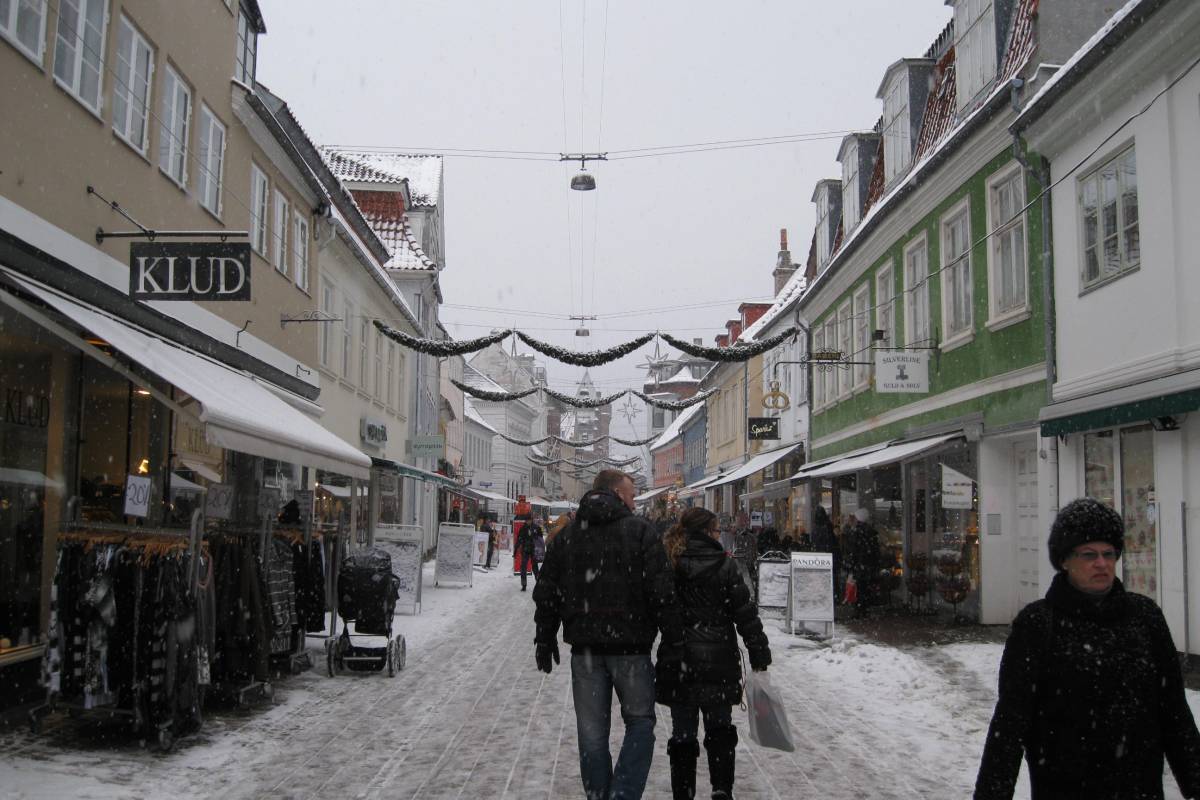
Friday night, around 2:30am, I was coming home from København with some friends. Outside the window I noticed white flakes spiraling down from the sky. My first snow in Denmark. The Jul season is here.

Denmark begins the Christmas season around the middle of November as the daylight gets shorter and the nights get colder. However, the season is called Jul is much more connected to the celebration of family and hygge than the actual Christian holiday. Garlands are strung from streetlamps over the main roads and many stores begin selling ornaments, candles and wrapping paper with Danish flags. Tuborg released its Julebryg that is only sold during the winter season. Tivoli is open again. Halloween pumpkins and cobwebs have been replaced with winter decorations and Christmas lights. The Danes also celebrate with a couple large Christmas meals consisting of fish, snapps, and a Danish form of rice pudding. Upon coming back from my travel break, I was surprised to see how quickly Denmark had accepted the season. In my Danish class on tirsdag, my fabulous professor had placed small candles on all the tables and handed out traditional Jul cookies similar to gingerbread.

In my opinion, America starts the Christmas season much later. Although stores start selling wreaths and local radio stations play Frosty the Snowman on repeat, most of the holiday feelings wait under December 1st and the beginning of Advent. We wait until after the Thanksgiving turkey has been carved and the last piece of pumpkin pie has disappeared before we pull the large cardboard boxes marked “X-Mas” down from the closet.

Danes lack two things: sun and Thanksgiving. I think the combination of these two factors provides the perfect reason to begin the Jul mentality over a month and a half before December 25th. For me it’s been the perfect excuse to wear my warmest scarf, find a wool blanket and cuddle up next to the little fireplace reading a good book.