First Day in Colorado

20120703-084028.jpg

The shuttle from Denver International Airport took us along I-70 heading west before rumbling through Glenwood Springs and curving south along 82. We past the red hills of Basalt and winding mountain passes in Snowmass, blurring past the windows of the Colorado Mountain Express. By 5:30pm, we had reached Aspen with a towering natural landscape and 8,000 ft elevation that quite literally took our breath away.

I imagine the air in Aspen feels the way it wants to be felt: lighter, cleaner, and away from smog clouds and gas exhaust. The people here seem to feel it too. Families ride bikes along quiet neighborhood streets where pedestrians always have the right of way. Aspen’s downtown center is filled with upscale restaurants and luxury clothing brands, connected by cobblestone walking streets and outdoor seating. The grassy park in the center of the city is framed by looming mountains to the north and the south, regal protectors of the idyllic scene. I couldn’t help but marvel at the newness. I’m not in Kansas anymore.

20120703-083831.jpg

College Grad: Permission to Wander

“Not all who wander are lost.” J.R.R. Tolkien. 

I found this quote scrawled on one of my father’s shirt this morning as I was hanging clothes. (Yes, sometimes I do chores). The words part of a larger quote from the Lord of the Rings, stuck with me. I found myself wondering, “How many college graduates leave school with the intention to wander, to see and explore, throwing longterm plans and cares to the wind?”

Engineering firms, Peace Corps, communication agencies, Teach for America, graduate school–hiring the best and the brightest. Many of my college friends have already solidified jobs, fellowships, and placement in graduate programs with a clear start toward their career path. They seem so ready, hungry for the chance to make a change, make money and make a difference. Have they postponed their opportunity to wander?

I can’t blame them. I too got swept up in the wave of applications, interviews and “See resume attached” e-mail bodies. During finals week, I accepted an offer from Center for EcoTechnology, a one-year fellowship position doing residential environmental outreach. I have a plan. Helping people save energy in Massachusetts. Finally I can hold my head high and say, “Yes I do have a plan after graduation” at awkward family gatherings.

Now, in just over a month I will begin in a new town with a new job and a new start. Craigslist is my new bookmark favorite as I search for apartments, a used car and available items to furnish my hypothetical new bedroom. I’ve tried to remember the last new friend I’ve made, how exactly strangers move from the awkward initial encounter to texting pals and Friday night plans. Am I settling for a short-term organized plan instead of wandering, exploring the unknown outside of academia? I don’t know. Maybe the act of wandering is more of a mindset anyway. One can only fear the fear of being lost.

Post-Grad just came on TV. Time to watch someone else struggle with life after college.

Passenger Seat Experiences

It’s been almost a week since I left the small farm in New Jersey, waving to the kids as they ran alongside the car. The “Welcome Katelyn” poster, which had hung on my bedroom door, was tucked into the backseat with messages scribbled into colored markers. I could still taste the cake Ellie baked as a goodbye surprise the night before. Yellow with purple frosting. Henry wanted to eat the piece with the K so Katelyn would be in his stomach.

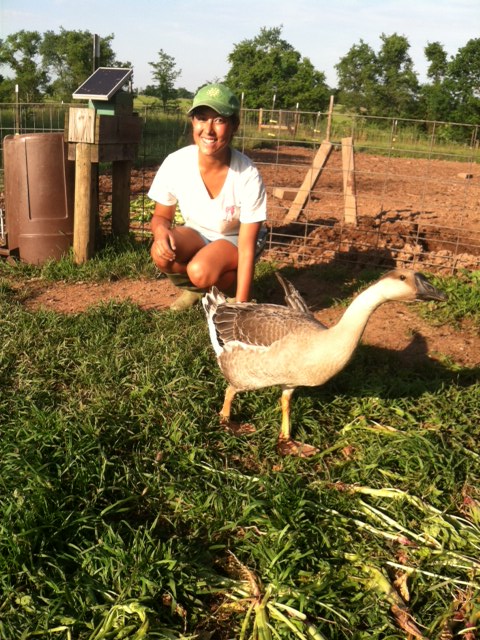
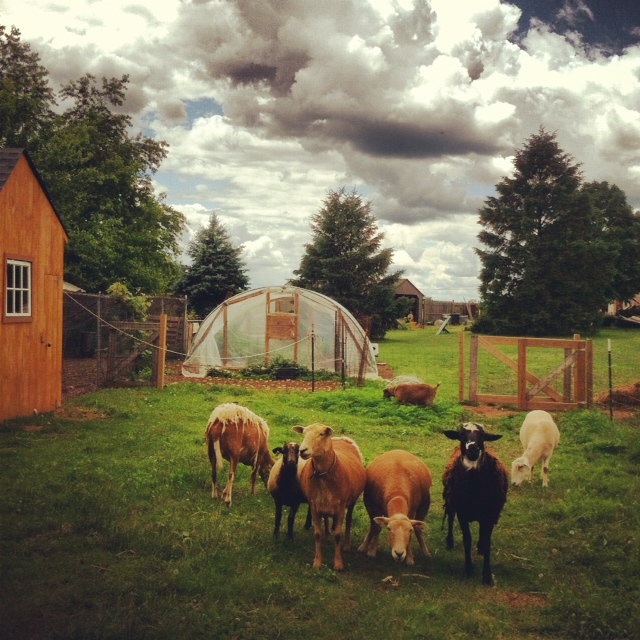
I took a picture at the farm before leaving–a newly formed WWOOFer tradition. The sheep and goats were camera-shy, skirting just outside the lens of the camera. Rosie, the goose, was the only one willing to pose with me after nibbling at my fingers and pants. I was glad to have some physical documentation of my time on the farm. Ei-ei-o.

The day after I came home, I found myself outside aggressively weeding the overgrown garden near the garage. There was little to nothing salvageable: some flowers and a small pine tree that spouted itself between the long green weeds. I pulled, raked, cut, sliced and relocated two yellow-spotted salamander before the ground was ready to be planted. I surveyed my handiwork with pride. My last two weeks of routine put to the test.

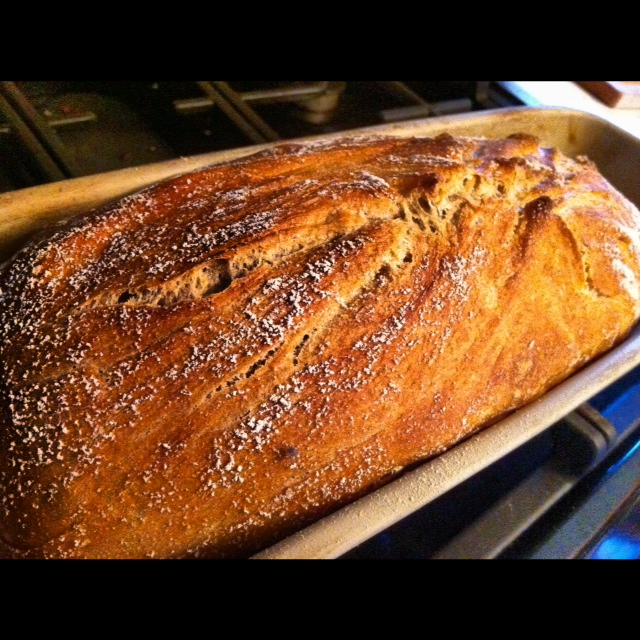
Last night I pulled up Janelle’s bread recipe and followed the directions, mixing flour, salt, and yeast together before letting the dough sit on the counter while I slept. In the morning, I pulled the sticky consistency from the bowl dusting the majority of the kitchen with flour before sliding the steaming loaf out of the oven. Golden crust just like I remembered.

We meet people all the time, those who share our lives for a couple of brief moments or for long years extended from childhood. It’s all too easy to push the gas petal and drive along without stopping to look back and think about the places we’ve been and the people we left. Incorporating past experiences, recipes, gardening tips or favorite jokes can keep those memories in the passenger seat instead of disappearing into the image reflected in the rearview mirror. Thank you Wilkinson family for your warmth, knowledge, and kindness that will follow with me along the road toward the future. 

Making Strawberry Jam

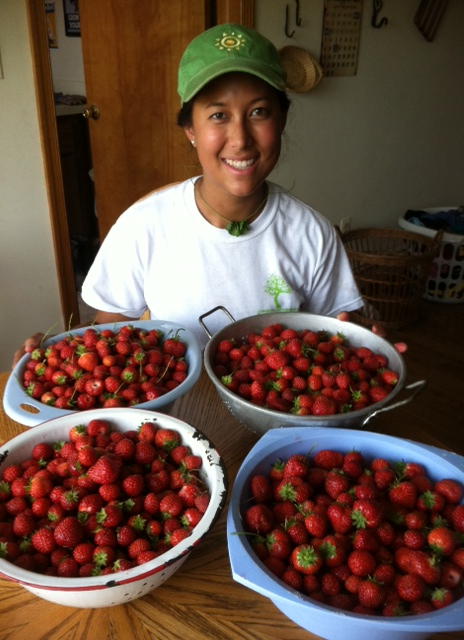
On Saturday and Sunday we picked strawberries in the garden. Smaller than the store-bought variety, these berries are just as sweet and completely pesticide free. Our fingers and tongues were red from the small red berries that filled our colanders and our stomachs. I asked what we would do with all of the fruit we had picked. The answer: strawberry preserves.

Strawberry preserves is the sweet taste of summer heat and sun-kissed cheeks spread thick over toast on cold winter mornings. It oozes, ruby-red and seedy, over brown crust completing the perfect PB&J. Here is an easy to follow recipe just like I learned a couple of days ago in the warm kitchen of the Hard Cider Homestead.

Strawberry Preserves:

  • 4 cups fresh strawberries (mashed)
  • 7 cups sugar
  • Certo fruit pectin
  • Canning jars and lids
  • 2 large pots
  • Butter (optional)

Cut the tops off the strawberries and put the berries in a large mixing bowl. Take a potato masher and mash the strawberries into a thick red pulp. Pour the contents (4 cups) into a sauce pan on high heat. Add the sugar and stir until the mixture boils consistently. Add the pectin and stir for 1 minute. During this time, the liquid will bubble and foam. Add a half-inch of butter to reduce the foam on the surface of the liquid. 

Remove from heat and ladle into glass jars.Screw on tops and lids. Add covered jars one by one into a pot of boiling water. Leave for 15 minutes. Remove the jars. Lids will pop when a seal has formed, preventing bacteria from contaminating the batch. Let cool and store.

A more complete recipe can be found here.

In less than 24 hours, I had followed a strawberry from its birthplace in the earth to the kitchen and into a glass container of preserves. My apron was relatively stain-free and I had successfully canned more jars than I cared to count. My newly acquired domesticity reminded me of long evenings with my mother, reading Little House on the Prairie on the living room sofa. I doubt Laura Ingalls could make strawberry preserves this good.

Loss of the Middle Men

The middle men have been eliminated. The monocropping farmer, pesticide distributor, truck driver, grocery store owner. They are all replaced.

My farming experience began as soon as Matt returned home from teaching at the local high school. I had a tour of the garden with rows of green vegetation peeking out from the dark earthy soil. Beets. Lettuce. Strawberries. Spinach. Tomatoes. No pesticides. I was introduced to the goats, sheep, goose, hogs, meat and laying chickens, and the family dog Lily.  There were the necessary tool sheds, a garage and two tractors- one old and new.

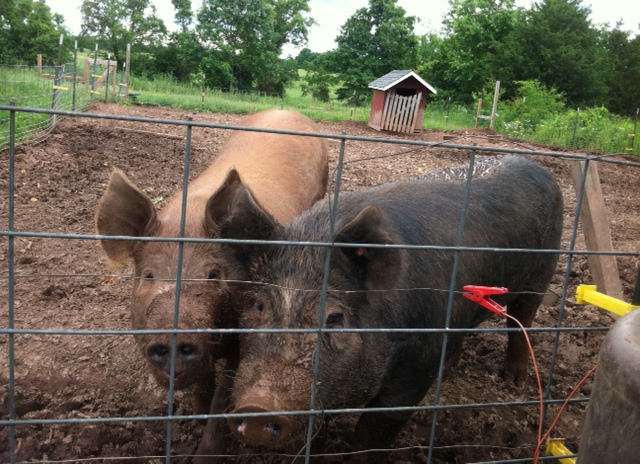
I became Matt’s clumsy less efficient shadow, mimicking his movement to complete the job at hand. My activities included shoveling organic material and transporting it to the potato plants, taking care to steer my wheelbarrow around the irrigation knobs and small leafy beginnings of life. There was weeding, racking leaves, and transporting forsythia branches to the compost using the tractor bed. The work was physical but not exhausting; back muscles tensed and expanded with each pitchfork lift. I watched as Matt pushed buckets of discarded food waste from the local organic pizzeria onto the dirt in front of the two 300 lb hogs. Their snouts scrunched and wiggled over elongated strips of mozzarella cheese, burnt crusts and tomato residue. A feast for mud-soaked kings and queens. 

I learned to identify garlic scapes, the long green stalk of a garlic plant that twists and curves toward the sky. They provided the base for my pesto, together with olive oil, lightly toasted pine nuts, and a hint of lime. Matt made the pasta by hand, kneading fresh eggs into the flour before stretching and pulling the dough into perfect strands. The salad with freshly picked lettuce and a small dish of homemade hummus completed the meal.

As I sipped my daiquiri from the strawberries harvested outside, I was reminded of the middle men. Those barrel of monkeys, swinging together, create the modern-day food chain. Production and consumption. Fast and cheap. Our Monday night dinner broke that chain. I could see the origin of my food out the window from the kitchen table: plants from the soil, eggs from the chickens, from diligence and sweat. The middle men were superfluous. I can’t imagine they will be invited to dinner anytime soon.

My Chance at Organic Farming

Americans have a complex love-hate relationship with food. We love to eat large varieties and larger servings of food at each level of the discarded food pyramid. But we hate to know where our food comes from– the farm that grew our hamburger, the country that exports our trail mix, the machine pumping the pesticides in our lettuce. Books such as Eating Animals, Fast Food Nation, and The Omnivore’s Dilemma among others have highlighted this  unhealthy relationship between the consumer and producer in today’s food economy.

What would it be like to go back, travel in time before the reality of wide scale meat recalls, McDonald’s global expansion, and increasing ignorance of the source of our daily meals? Can we return to simple agricultural living? I wanted to know. On Monday, I will travel south to New Jersey to work for two weeks on a 5-acre sustainable organic farm, eating the food I helped to grow and feed.

Hard Cider Homestead is part of WWOOF or World Wide Opportunities on Organic Farms, an organization that partners willing volunteers with organic farms across the world. In exchange for working in the fields, tending to the animals and assisting with general maintenance, these volunteers receive food and lodging as well as the experience of living off the land. WWOOF is rebuilding the damaged relationship between food production and human consumption one farm at a time.

I found Hard Cider Homestead through my university’s job listings and connected with the corresponding Bucknell alumna. Janelle and her husband Matt explained the workings of the farm and expectations they had of a new volunteer. After a few e-mail exchanges, I was scheduled and ready to go.

Unlike the times before cash crops and concentrated animal feeding operations (CAFOs), I will have access to my cell phone and Wi-Fi. I have packed some old sneakers, a couple of t-shirts and my computer with the hope that I will gain a new found appreciation for agriculture life. And while Farmer Kate may not be my life calling, I look forward to the moment when I can look outside and know exactly where my dinner came from.

Final Finals Week

The end of the semester is a whirlwind. The last day of classes, a time for celebration, is short-lived. Finals week looms overhead like a dark thundercloud that releases a torrent of battered GPAs and hastily packed belongings. Students spend time hunched over flashcards or perched for hours in the corners of the library, face illuminated by gray computer screens. Long sleepless nights are fueled by espresso shots, unplanned naps, and fierce adrenaline only the fear of a failing grade can produce. As exams finish and the days accumulate, short tearful goodbyes are heard through the halls and across the quad. A common phrase “the last” becomes attached to thoughts and actions so seemingly mundane activities hold increased importance. The last time I’ll see you before going abroad. The last time we’ll live on the same freshmen hall. The last time I’ll eat in the caf.

I almost missed the subtle difference between the end of this semester and semesters in the past. The papers, exams, and expectations were the same. The cups of coffee and time spent furiously revising the perfect conclusion paragraph reflected any other finals week. I watched my underclassmen friends pack up their SUVs and move futons from their cramped dorm rooms into storage units for the summer months. Yet whenever I attached “the last” to a completed activity, the weight of my words hung heavy  as they slipped into the air.

Approximately 43 minutes ago, I emailed my final assignment off to my professor.

“I have attached my personal reflection. Thanks for a great semester. -Katelyn”

And that was it. I would be lying if I told you a fanfare sounded or a chorus of voices floated through my open bedroom window. The only confirmation I received signifying the end of my 19 year academic career was a Gmail text box. Your message has been sent. Time to move on.

Tomorrow I will pack up and travel with four best friends to Hilton Head, South Carolina for a 7-day extravaganza affectionately known as “Senior Week.” This migration happens across the campus as people pack up and drive down south for one last hurrah. This is the time for reliving the past four years of our undergraduate experience with strong drinks and stronger friendships. It will be glorious and fleeting– a beautiful sunset that disappears as soon as the camera lens clicks into focus.

So bottoms up to the last of many things and the first of many more. Image  

Vignette 2: Reaching Upward

Already our trip to the D.R. seems like years ago. The tulips and blooming cherry blossoms on campus bear little resemblance to the palm trees and coconuts of the far away island nation. Classes are winding down and each of us has settled back into the routine of an American college student: study, eat, exercise, drink, plan for the future.  Our weekly B.A.C.E.S (changed from A.C.E.S.) meetings on Thursday at 5pm is the only time our group is back together, planning and reminiscing about the trip that changed our status from strangers to close friends.

Vignette 2: Reaching Upward

The Cabon school took 15 months of planning, funding, and hard work before its completion in July 2009. The school, located in the community of Cabon, can now hold 100 students in addition to a computer lab, multiple classrooms, two finished floors and bathrooms. The light blue building stands as a beacon of hope for the children who are fortunate enough to enter inside.

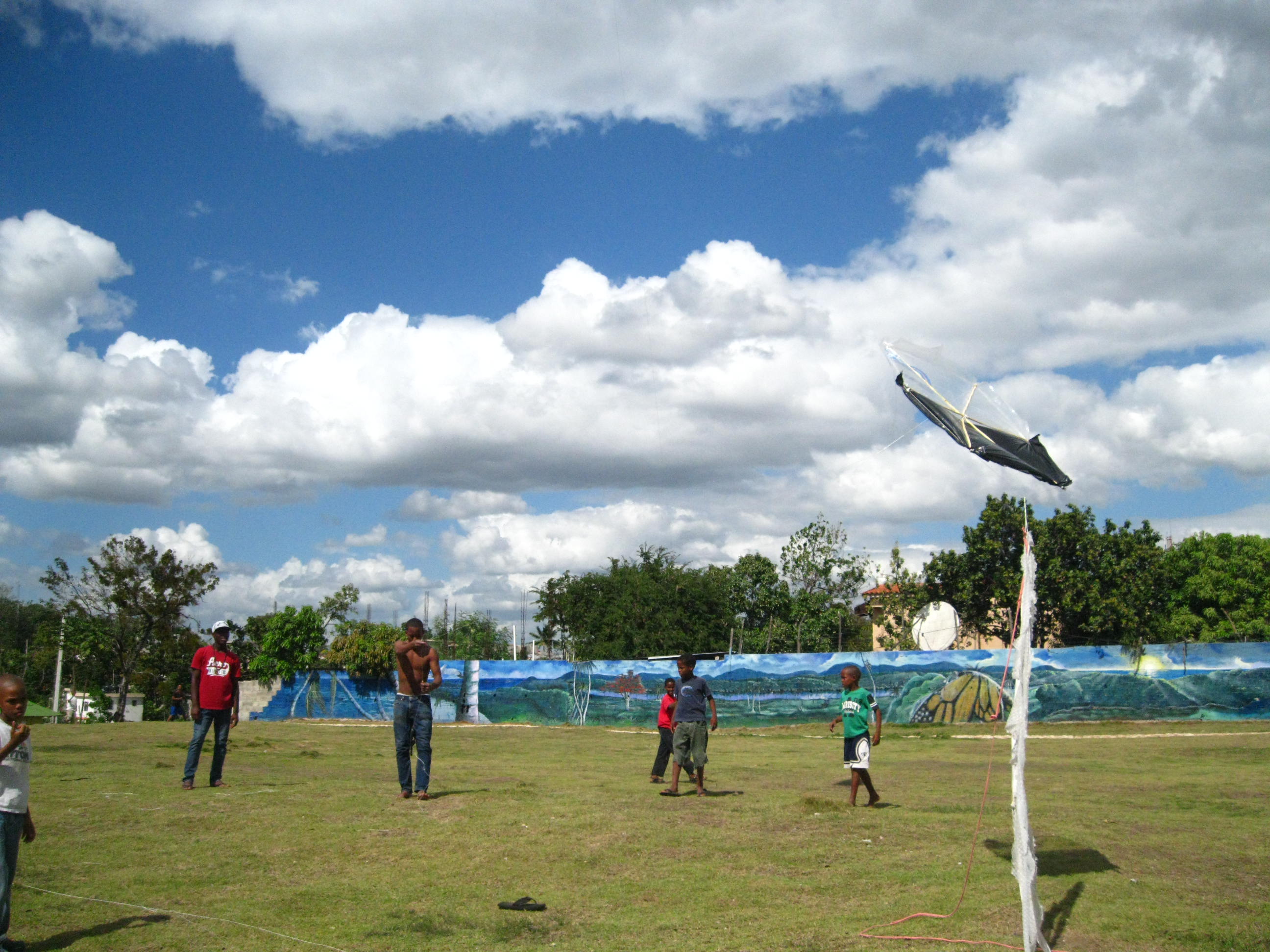
Behind the school is a large open field of green grass surrounded on two sides by concrete walls. These walls depict the heartbeat of the community: large murals of old men, children, and rolling hills illuminated by a setting sun. Proferio, the leader of ACES-DR, tells us this area used to be a toxic abandoned site that was recently cleaned up for the school children to play. There are no shortage of traps for children in the DR, physical and otherwise.

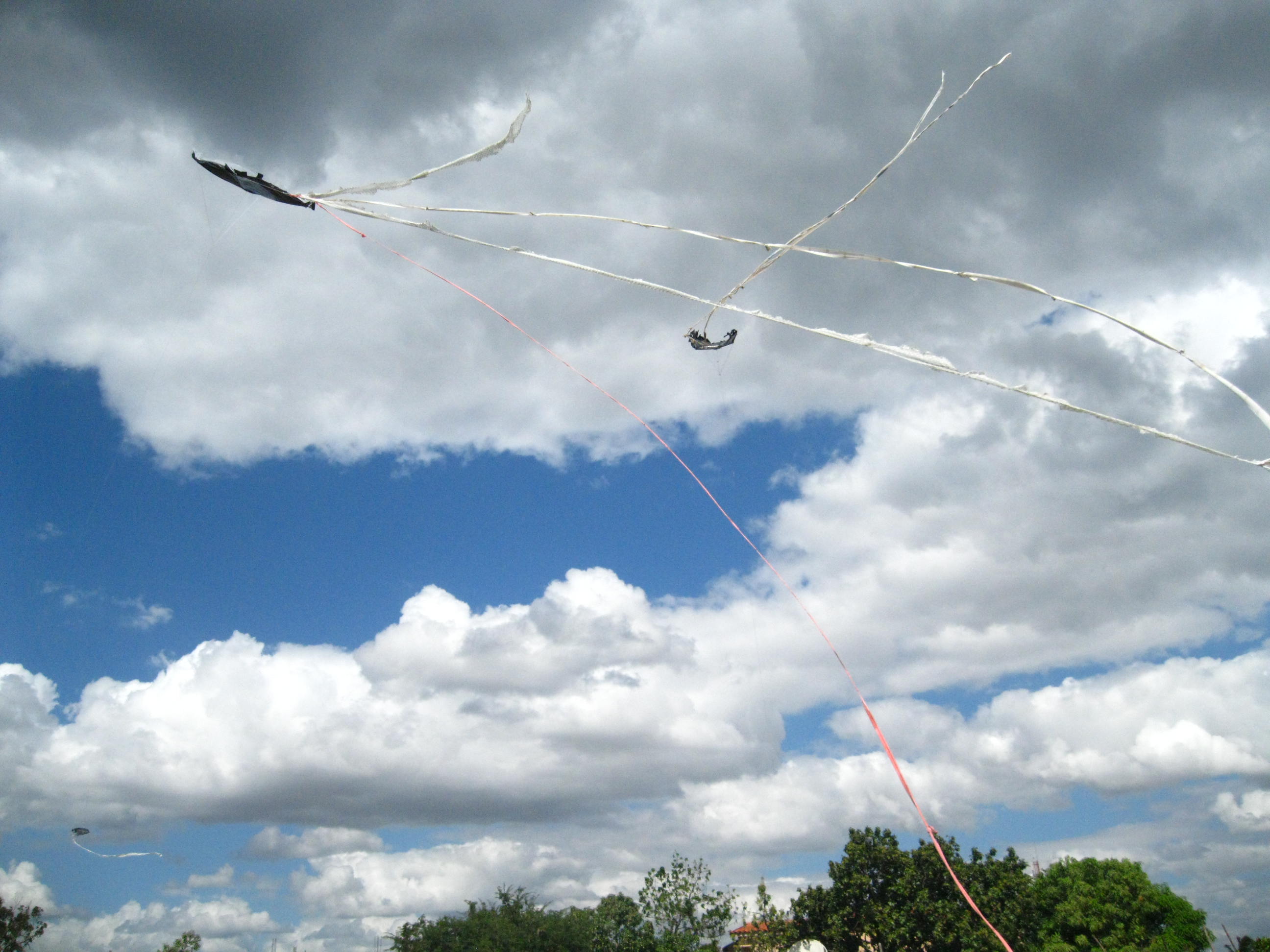
Today, the field is covered with boys and young men flying kites high above the green carpet beneath their feet. The kites are ingeniously engineered–supple wooden beams in the shape of a cross, held together by a garbage bag tarp pulled across the frame. The long white tails made of twine or plastic whip and flutter in the breeze. It is the perfect day for flying kites and they skitter above our head, swimming in the cloud-smeared sky. 

One of the kites gets caught in a tree on the opposite side of the road. The boys yank and jerk the string but cannot free it from the gnarled branches. The kite appears to be lost forever, visible yet out of reach. I’m reminded the Cabon school behind me, the only link between a life grounded in poverty and one of endless opportunity. The sky is the limit.

There is commotion as one boy wearing jeans and flip-flops begins to shimmy up the tree. From the ground, we watch in awe as he finds delicate foot holds in the smooth trunk. He climbs effortlessly despite the breeze and thinning branches. I shade my eyes as he continues upward, 40 feet about the ground.

Poised in the crook of the tree, the young man begins to shake the branches on either side of his body. I am certain he will fall but cannot tear my eyes from the limber form silhouetted by the sky. The men on the ground take turns yanking on the thin white line until finally, the kite escapes the tree’s clutches and dances into the open air. I can feel those around me breath a collective sigh of relief.

I believe each of us is born holding a kite, opportunity stretched between thin beams of courage and strength. For some of us, our kites leap instantly into the air and are carried upward toward the sky and the stars, dancing in the warm breeze. For others, the string is twisted, the structure bent and the kite flails before collapsing in a heap of broken dreams and damaged pride. There are trees with sharp branches and sudden squalls that threaten to break the delicate string tied between small fingers.

Don’t give up, little kite. Someday you, too, will soar.

ACES: Spring Break 2012

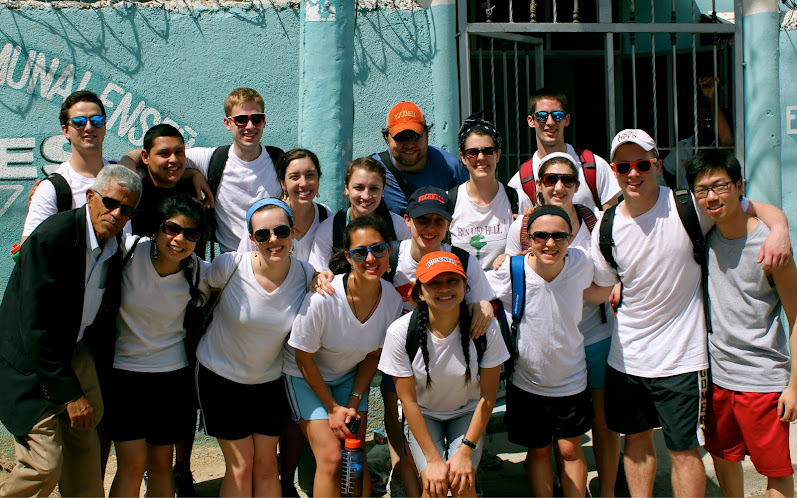
Two weeks ago, I traveled with a group of 16 Bucknell students and faculty to the Dominican Republic with a student-led group called ACES for a service-learning trip. I had heard only positive things about alternative spring break trips- these trips change your life- and as a graduating senior, I felt it was my last opportunity to apply for the chance to make a difference and find a new appreciation for everything I take for granted. Extremely unsure of what to expect, I packed up my carry-on and prepared for an adventure.

The Dominican Republic is a small island with rolling hills, tall palm trees and tropical flowers in pinks and reds. The sun seems to shine everyday and the water is the brightest, most vibrant wash of turquoise blues. Goats are tied together in small herds along the streets, nuzzling at the neighboring fruit stands full of bananas and mangos for sale. The radio plays Spanish music that reflects the language and the culture-fast, passionate and full of life. Children play in large groups from even larger families and every household is familiar with a plate of beans and rice. I felt the sincerity and compassion of the people like the sun overhead, a soft warmth that spread across my skin and into my heart. The people I met, the smiles I remember, and the stories I heard were full of suffering, compassion and unbridled hope.

I will break up my experience into a series of small vignettes, mental pictures that lay partially developed in the dark room of my mind. I hope to share them so the pictures, in all their beauty, will materialize for you as they did for me.

Vignette 1: Food Drive

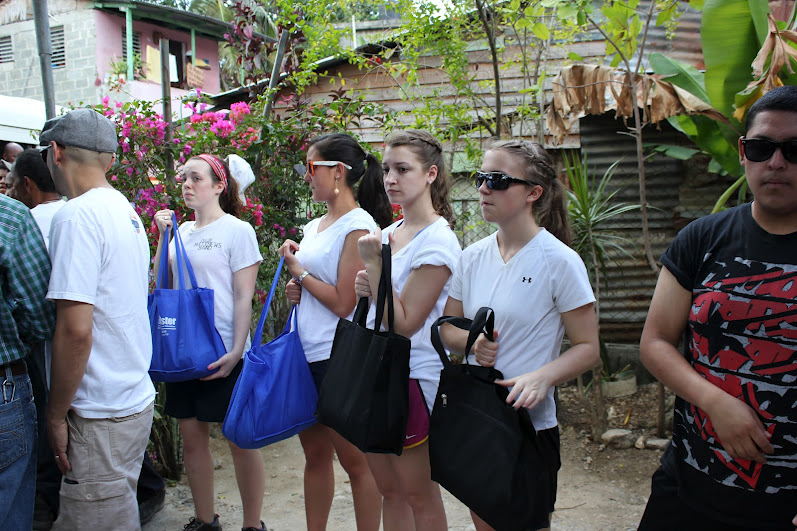
We are standing in a single file line, leading from the back of the house up to the high metal gate. The straps of the bag-heavy with beans, rice, pasta, and cooking oil-dig into the skin on my hands. I can feel my palms tense and beads of sweat begin to form under the shadow of my sunglasses. The sun beats down on the faces of the women, children, and young men who wait on the opposite side of the fence. They stare at us with large brown eyes and I look down at my feet, wondering why I am here and they are there. 
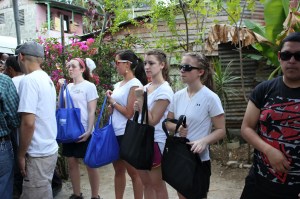
Last night, the ACES group had made almost 200 food packages with measured Ziplock bags of rice and sugar, giggling and jamming to music into the night. The seriousness of our mission was realized as we counted bags and prepared for the morning activities. Some families will not get a bag, one of the group leaders tell us. We don’t have enough to go around. 

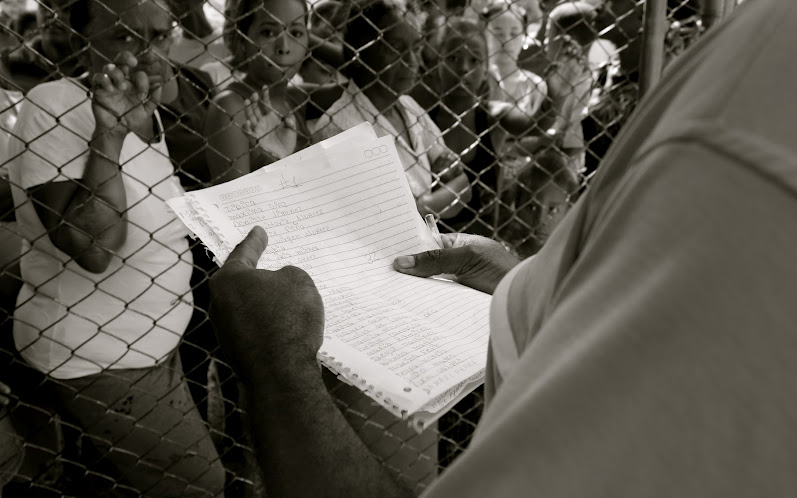
The food drive coordinator calls out names to come and receive their bag. One by one, the empty hands and hungry mouths appear before me. These are the neediest people in the community. Everyone will not get a bag. I feel ashamed. 

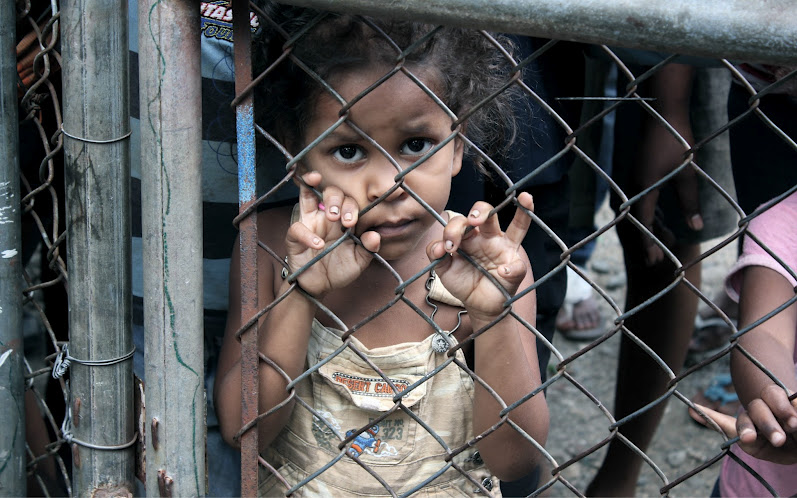
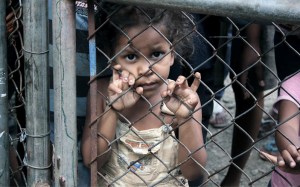
Children are everywhere. They play and joke but it is mid-morning, the time most children should be in school. Here in the Dominican Republic, school is not an entitled right but a treasured privilege. I am reminded of my own academic trajectory, the assumption that I would always go to a premiere American university. The distance between my dusty flip-flops and the small pink sandals of the girl standing behind the fence seem miles apart. She reaches her fingers through the holes in the fence and scuffs her feet. We are worlds away and close enough to touch.
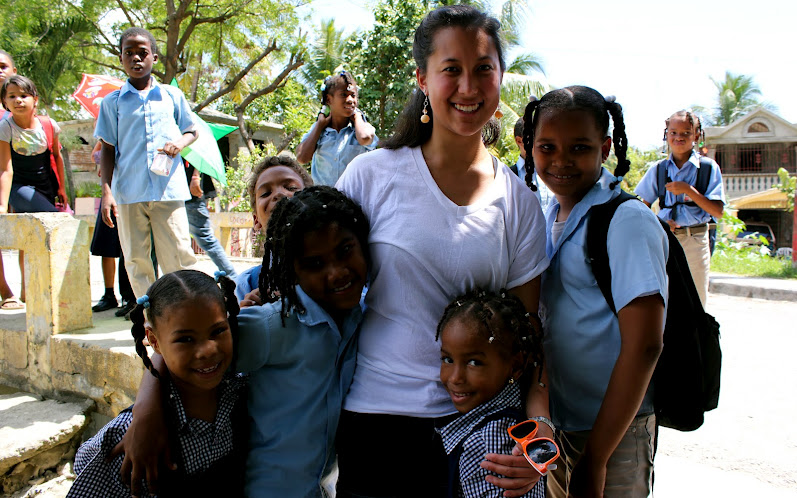
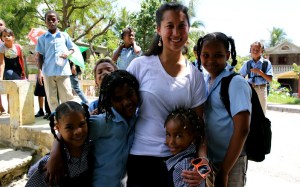
After the drive, we take some time to walk through the community. The stream bed next to the houses is dry and caked in discarded food wrappers and plastic bottles. People are friendly and I speak to some children using my limited Spanish phrases. The girls give shy smiles and tell me their names. Before we get back on the bus, a couple of girls sneak up next to me and request a photo. I ask Phil to take some pictures of us and he obliges. They giggle and laugh at one another. I feel both warmed by their joy and angry at my helplessness.
As the bus rumbles away, I want to yell, “Stop, we have more to do! We have more people to help!” But I sit in silence as the houses disappear beyond my sight. I am reminded that there are always people who need our help, who deserve to know they are worthy and deserving of a life free from suffering. It is our job to never give up the belief that our small acts of kindness make a difference. Like water droplets, our seemingly invisible actions, when combined, make up an ocean of possibility.

Photos by Phil Kim ’12.

Traveling Vegetarian

Happy Spring Break…and Spring rolls.

I wanted to leave you with a blog post my friend Justin e-mailed me a couple days ago about Vietnam, a traveling vegetarian’s heaven. My requirements to finish my senior year (and senior thesis) was the only thing preventing me from buying a plane ticket on the spot. This short post reminded me of a couple students I had met at the Student Environmental Conference, vegetarians who chose to eat meat while on the dusty road, aka traveling carnivores. In foreign cities and unknown destinations, maintaining a healthy meat-free diet can be quite difficult not to mention the strange looks one might receive for refusing pork chops and BBQ beef. I need to tell them I found the perfect country cuisine.

For my Spring Break, I will be traveling with about 15 other students and faculty south to the Dominican Republic for an alternative spring break service trip called A.C.E.S (Advancing Communities: Educating and Service). We will be staying a week to provide medical care, construction help and educational services. In my effort to continue my vegetarian experience, I was relieved to find that there would be a beans and rice option as well as salad at every dinner meal. There was some question regarding the possible use of chicken stock in the dish but I will just have to wait and see. I may have to sacrifice some chickens next week and if so, Dear Chicken God- I am truly sorry. 

So with another international adventure ahead, I promise witty commentary and vivid pictures upon my return to the US. In the meantime, read about Vietnam and enjoy the spring weather.